A Five-Level Sales AI Maturity Model: From Assistant to Agent
Use five practical levels—writing, retrieval, context, controlled action, and improvement—to decide what your sales team should build next.
Locate the bottleneck before buying more automation
OpenAI's 2026 enterprise AI report describes a move from AI assistance toward execution in its enterprise customer base. The Agents API public beta shows infrastructure for longer-running work. Those are publisher statements about products and observed usage; they do not mean every sales team should immediately let an agent edit CRM and send customer messages.
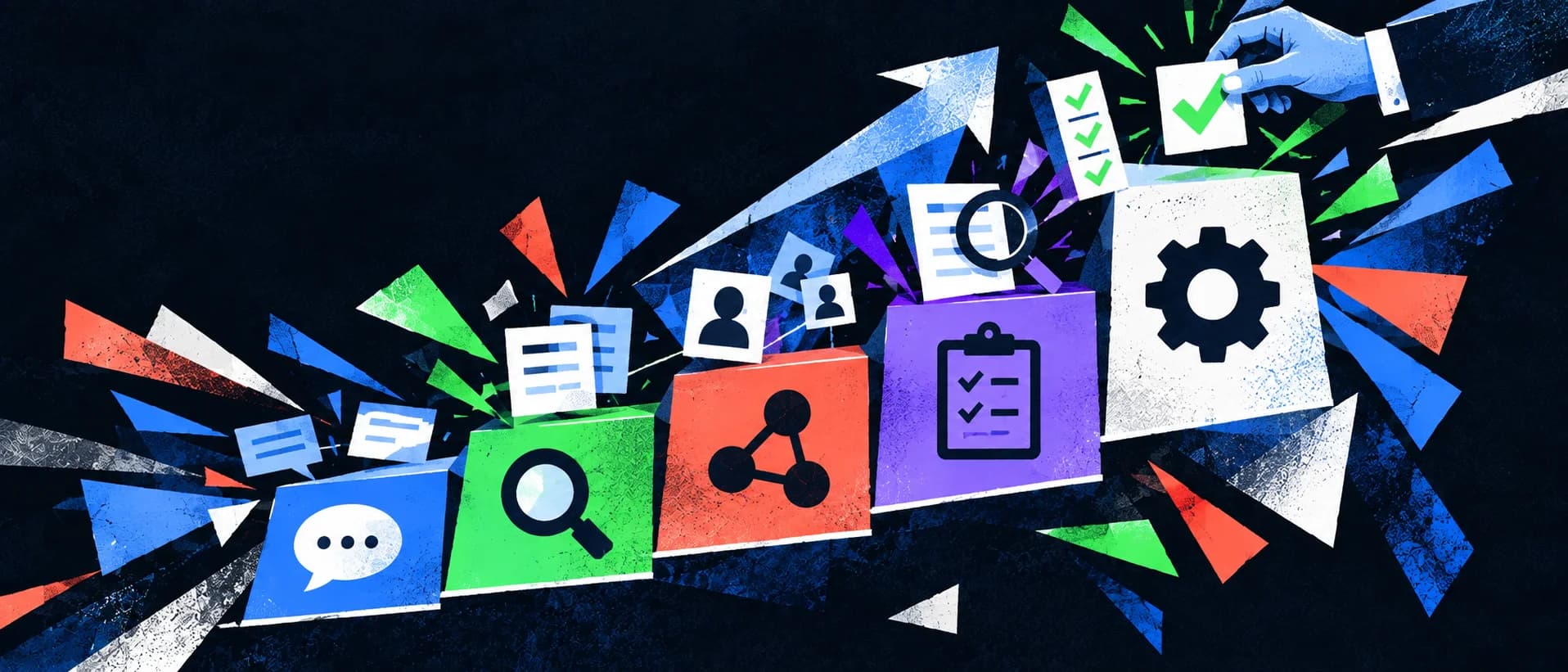
The five levels below are a KnowSales editorial assessment framework, not an official OpenAI model or a vendor ranking. Use them to identify the weakest part of your current workflow and decide what to improve next.
| Level | What the team can do | Evidence that it works | Failure to watch |
|---|---|---|---|
| 1. Expression | Draft, translate, and revise sales content | A human checks figures and commitments | Better wording hides wrong facts |
| 2. Retrieval | Find product documents, playbooks, and cases | Important answers open to original sources | Outdated material gets reused |
| 3. Context | Combine one verified account with product knowledge | Profiles and dated activities stay distinct | History leaks across similar accounts |
| 4. Controlled action | Propose and execute approved updates | Permission, approval, idempotency, and read-back work | Silent or duplicate writes |
| 5. Improvement | Fix knowledge and process from outcomes | Adoption and errors are measured over time | Usage volume masquerades as value |
Level one is easy to acquire. Levels three and four demand more business design because sales records have entity identity, time, provenance, and access rules. Level five does not mean salespeople disappear. It means the system can turn mistakes and successful practices into evidence for the next iteration.
Run one inquiry through the five levels
A fictional buyer, Example Customer A, asks whether a machine fits its material and when delivery is possible. At level one, AI makes the reply polite. At level two, it retrieves the relevant product guidance. At level three, it verifies the account and reads the last material trial and commitment. At level four, it proposes a dated follow-up activity with target, evidence, and proposed text; a salesperson approves it, and the system reads the record back. At level five, the team checks whether the technical answer was adopted, whether the buyer progressed, and which product questions still lack approved content.
If the level-two product document is stale, level-four automation accelerates the wrong answer. Upgrade according to the failure you can actually observe.
Three questions for investment decisions
For each level, ask:
- How many valuable tasks get stuck here each week?
- If this step fails, is the cost rework, or a wrong price, delivery commitment, or exposure of customer information?
- What observable evidence would show improvement—answer adoption, correct read-back, or a customer next step?
Agent calls alone are a poor ROI measure. They may reflect repeated attempts to repair the same mistake. If sellers continually search old emails, improve source retrieval and dated account activities. If they enter the same facts repeatedly, design safe write-back. If the system writes many records but nobody trusts them, work on evaluation and review.
How KnowSales supports the progression
KnowSales supplies several building blocks: knowledge search, citations, customer profiles and activities, MCP tools, permission boundaries, and a customer dashboard. A team can adopt them in stages. The layered AI Sales OS guide explains the larger architecture; the MCP connection guide is a starting point for read-only access.
Actual action capability depends on account permissions, feature state, and live acceptance. A gray rollout or design document does not make a feature generally available.
FAQ
Must we buy the five levels in order?
No. This is a diagnostic model. Fix the most costly bottleneck first, while ensuring high-risk actions have reliable identity and source foundations.
Is AI email drafting too basic to matter?
No. If multilingual communication is the current bottleneck, level one may deliver real value—provided figures and commitments remain checked.
Does controlled action mean automatic customer emails?
No. External promises still require explicit authority, review, and traceable records.
How do we prove level five is working?
Measure answer adoption, correct writes, timely next steps, and whether recurring errors decline.
Mark your team's current level, then use the sales agent evaluation checklist to choose a small test. If you need consistent customer and product context, explore KnowSales.