From WhatsApp and WeChat Threads to Sales Memory: Why AI Needs a Hard-Fact Ledger First
Before AI writes WhatsApp or WeChat sales leads to CRM, build a hard-fact ledger from per-thread history and confirm the write plan.
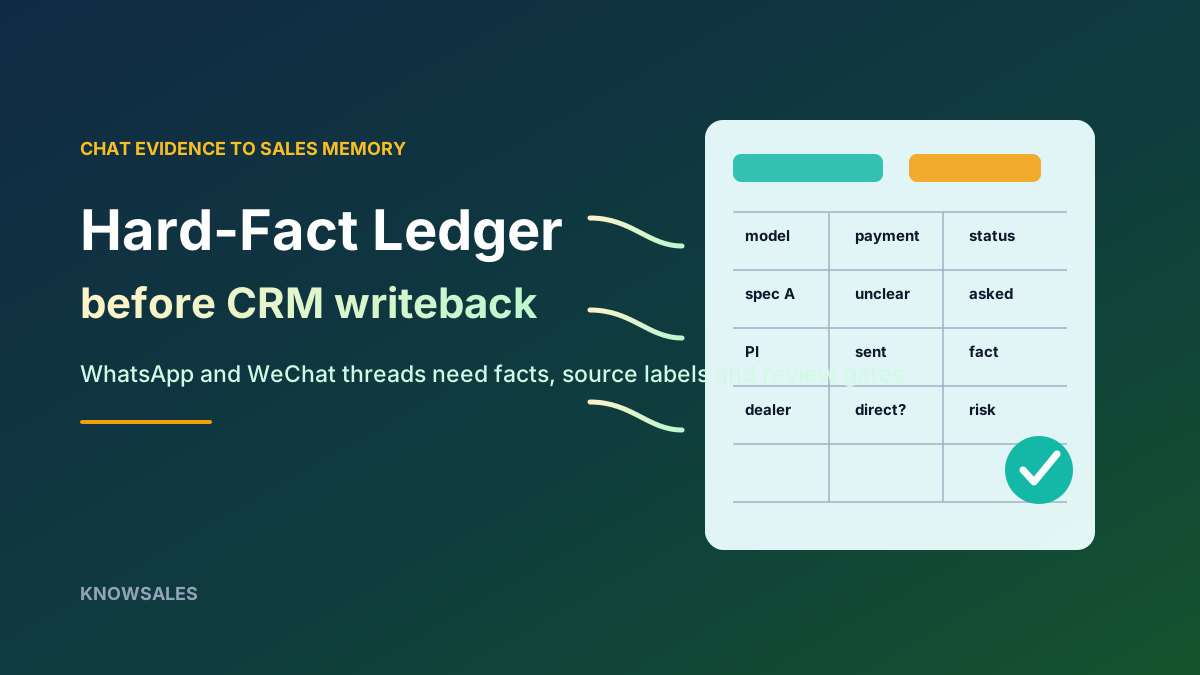
A chat summary is not a sales fact
Many AI sales tools treat WhatsApp or WeChat analysis as a summarization problem: take the latest messages and produce "customer intent."
That sounds efficient. It is also risky.
The most important sales signals are often not a neat sentence. They are hard facts scattered across the thread:
- which model the customer asked about;
- what size, material, power, or configuration was mentioned;
- whether price, discount, or payment terms came up;
- whether drawings, photos, PI files, packing details, or installation materials were sent;
- whether the contact is a dealer, end customer, reseller, or third party in a channel conflict;
- what the customer merely asked versus what your team actually confirmed.
If AI returns only "the customer is interested," the system loses the details that matter for follow-up, quotation, and account memory.
The safer flow: thread history first, hard-fact ledger second
The better workflow has three steps:
per-thread history -> hard-fact ledger -> review draft / write plan -> KnowSales
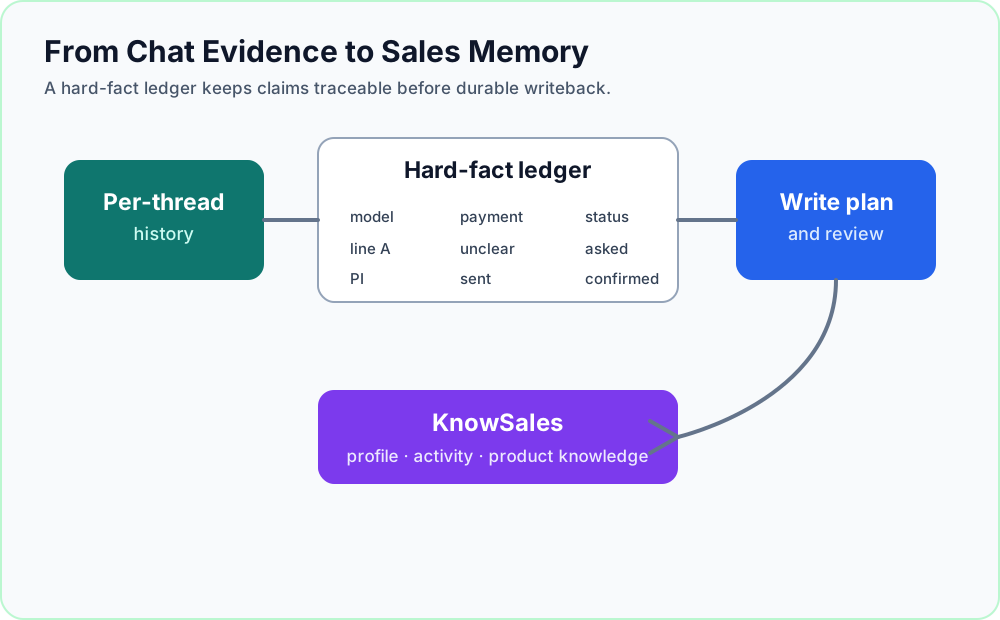
The first step is not a candidate summary or a search snippet. It is the actual per-thread history. Session lists, candidate TSVs, and signal-scan snippets are useful for triage, but they are not enough to support final sales conclusions.
The second step is the hard-fact ledger. This is not prose. It is a structured table that explicitly covers or rules out the fields that drive sales decisions:
| Field | Why it matters |
|---|---|
| Amount / discount | Affects quotation, margin, and approval |
| Model / configuration | Determines technical fit and quote scope |
| Payment terms | Defines commercial risk |
| PI / shipping / delivery | Indicates order status and fulfillment risk |
| Installation / license / service issue | Defines support boundaries |
| Product parameters / attachments | May require engineering review |
| Dealer / direct / reseller / channel conflict | Changes the follow-up strategy |
Only after that should AI produce a review draft or write plan. And only after confirmation should anything enter KnowSales.
Each fact needs a source-status label
A hard-fact ledger also needs one subtle but critical field: source status.
The same line can mean very different things depending on where it came from:
| Label | Meaning |
|---|---|
customer_asked | The customer asked, not yet confirmed |
team_confirmed | Your team confirmed it |
needs_engineering | Engineering or product review is needed |
historical_record | It came from historical records |
third_party_claim | A third party said it |
unclear | Not clear yet |
Without this label, AI can turn "can you support this specification?" into "customer confirmed this specification," or treat a third-party claim as company truth.
That is how dirty CRM data gets created.
When writing to KnowSales, layer boundaries matter
Even confirmed information should not all go into the customer profile.
The safer routing is:
- one chat, email, call, order, payment, or support event -> customer activity;
- stable company background, contacts, and long-term demand -> customer profile;
- reusable product knowledge, FAQs, objection handling, and requirement boundaries -> product knowledge or sales playbook;
- anything still needing human confirmation -> review draft only, no durable write.
SalesFlow is useful here because its communication-summary workflow separates facts from judgment and produces a write plan. KnowSales provides the durable memory layer, but the intake must respect the evidence boundary.
Why this is an SEO-worthy problem
Teams are already searching for "WhatsApp sales lead extraction," "WeChat CRM automation," and "AI customer chat analysis."
The real question is not whether AI can extract something. It is:
- Can the extracted claim be traced back?
- Does it separate customer fact from rep judgment?
- Does it prevent customer identity mistakes?
- Does it write to the right memory layer?
That is the difference between a summarizer and a sales memory system.
Summary
WhatsApp and WeChat threads contain valuable sales signals, but AI should not write summaries directly into CRM or a knowledge base.
Start from per-thread history, build a hard-fact ledger, generate a review draft and write plan, then route confirmed information into profile, activity, product knowledge, or tracker layers. That turns chat analysis from "faster dirty data" into compounding sales memory.