ChatGPT Work for Sales Still Needs a Customer Memory Layer
ChatGPT Work, sales plugins, and connected agents can act across CRM and email. Learn why durable customer memory remains the missing layer.
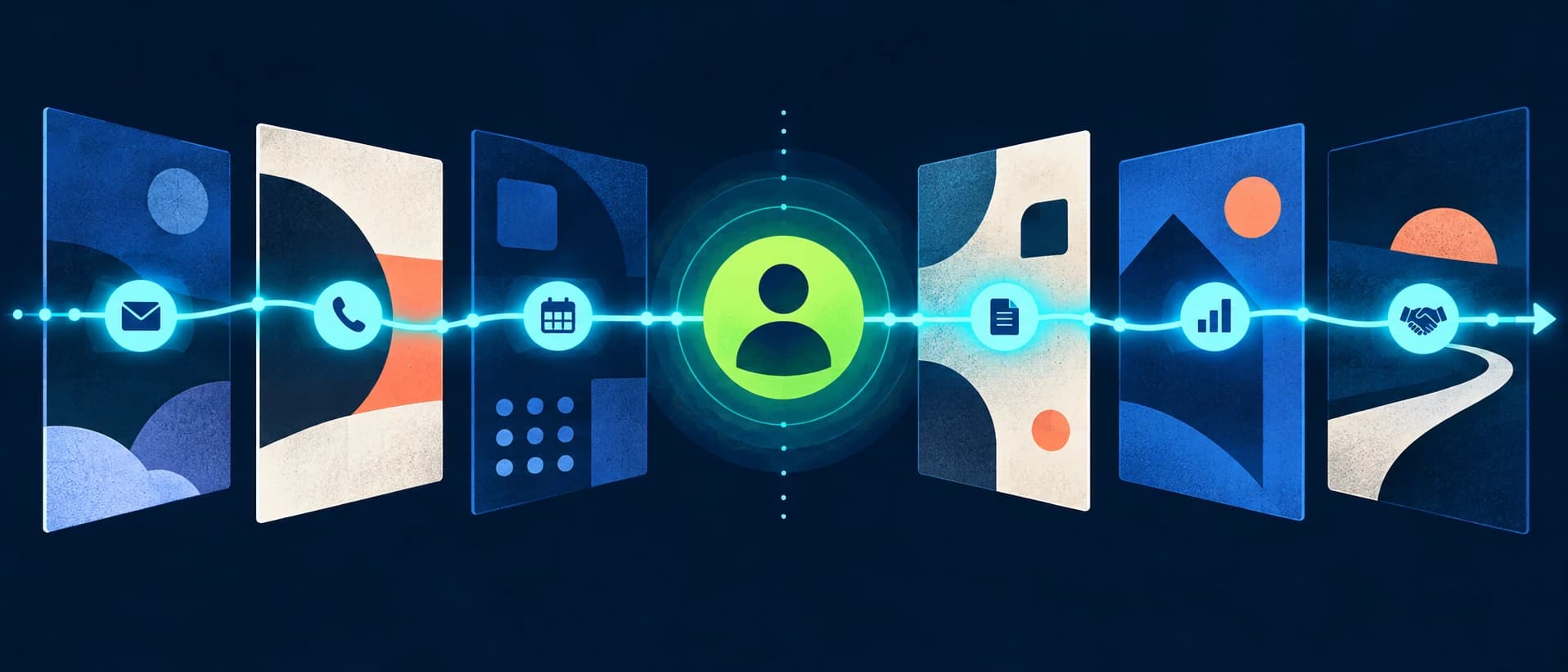
The sales interface is changing
For years, a seller's workday was organized around applications: open CRM, search email, review call notes, draft a follow-up, then update the opportunity. The new interface is a conversation with an AI workspace that can reach those systems.
OpenAI now describes ChatGPT Work for sales teams as a place where sellers can connect customer signals, prepare for meetings, draft follow-ups, review pipeline, and delegate work through plugins. That is an important shift. It also creates a new question:
Microsoft is moving in the same direction: its Sales Agent in Microsoft 365 Copilot brings CRM context, meeting history, next steps, and writeback into the seller's flow of work.
If the AI can reach every tool, where should the durable customer truth live?
The answer cannot simply be “inside the current chat.” A conversation is a work surface. It is not automatically a governed system of record.
Connected does not mean remembered
A sales agent can be connected to CRM, email, call transcripts, calendars, and files and still produce weak work. Connectivity solves access. It does not solve the quality and structure of the context being accessed.
Consider four common failures:
- A useful customer insight remains in one chat and disappears from the next session.
- A temporary event such as “may pay this week” is copied into a permanent account profile.
- Product guidance and customer-specific concessions are mixed in one note.
- Two similar company names cause the agent to retrieve the wrong history.
The underlying problem is not lack of intelligence. It is the absence of a durable memory contract.
What a customer memory layer must preserve
A reliable customer memory layer should answer five questions before an agent uses a record:
| Question | Why it matters |
|---|---|
| Who is this about? | Prevents one account's history from leaking into another |
| What kind of record is it? | Separates stable profile, one-time activity, and reusable knowledge |
| Where did it come from? | Lets a seller check the source before acting |
| How current is it? | Stops an old quote or promise from appearing current |
| Who may use it? | Keeps personal, team, customer, and partner knowledge apart |
This contract turns “more context” into usable context.
The three layers of an AI sales workspace
The most resilient pattern separates interface, memory, and execution.
1. AI workspace: where the seller asks and decides
ChatGPT Work, Codex, Claude, and similar tools are excellent work surfaces. They can research an account, compare documents, write an email, and coordinate tools. Their advantage is flexibility.
2. Sales memory: where customer and product context persists
This layer stores customer profiles, timestamped activities, product knowledge, objection responses, and source-backed conclusions. It must remain useful when the team changes models or AI clients.
3. Action systems: where transactions happen
CRM updates, email sending, quotation generation, task assignment, and billing belong to systems with explicit permissions and audit trails. An AI should propose or perform these actions only within a known boundary.
MCP and plugins can connect the layers. They should not collapse them into one undifferentiated data pool.
How KnowSales fits the new sales stack
KnowSales is designed as the durable sales-memory layer between flexible AI workspaces and operational systems.
- Customer profiles hold stable account context.
- Activities hold dated conversations, meetings, follow-ups, and commercial events.
- Product and objection knowledge remain reusable without becoming customer history.
- Personal and shared libraries keep private working notes separate from governed team knowledge.
- MCP lets an authorized AI workspace retrieve or write within an explicit tool scope.
This means a seller can change the AI interface without abandoning the memory accumulated behind it.
For the architecture in more detail, read Giving Your AI Sales Agent Persistent Memory with MCP.
A practical workflow
Suppose a seller asks an AI workspace to prepare a follow-up after a customer meeting.
- The AI retrieves the exact customer profile and recent activities.
- It retrieves relevant product knowledge separately.
- It drafts the response in the requested language.
- It shows which statements came from the customer, the product library, or seller instructions.
- It proposes a write plan for any durable update.
- After confirmation, it writes the activity and reads it back.
The AI workspace remains fast and conversational. The memory layer remains structured and inspectable.
What should stay out of durable memory?
Not every thought deserves to become account truth. Keep these items temporary unless confirmed:
- speculative close probability;
- an unverified product fit;
- a draft discount;
- a model-generated summary with no source;
- a company match based only on similar keywords;
- an internal instruction that should never be customer-visible.
This is why an effective sales agent needs both memory and restraint.
Frequently asked questions
Does ChatGPT Work replace CRM?
It can become the conversational front door to CRM and other tools. That does not remove the need for governed account records, permissions, lifecycle rules, and auditability.
Is a vector database enough for sales memory?
No. Semantic retrieval helps find related material, but sales memory also needs identity, record type, recency, source, permissions, and write controls.
Why not store everything in the AI conversation?
Chats are useful working context, but they are difficult to govern as the sole durable record. Important sales facts need stable objects that can be retrieved across sessions and verified independently.
Can one memory layer work with several AI clients?
Yes. A standard connection such as MCP allows different authorized clients to use the same governed context without copying the entire knowledge base into each tool.
The durable advantage is context
The AI interface will keep changing. Models, plugins, and agent experiences will improve quickly. Customer history, product truth, and the team's accumulated judgment should not reset every time they do.
The winning sales stack is not the one with the most connected tools. It is the one that turns those connections into durable, source-aware customer memory.
Connect an AI workspace to KnowSales and test the memory boundary with a low-risk, read-only customer question first.