AI Sales Agents Cannot Fix Dirty CRM Data by Guessing
A practical CRM data-hygiene framework for AI sales agents: identity, profile versus activity, source evidence, safe writeback, and recovery.
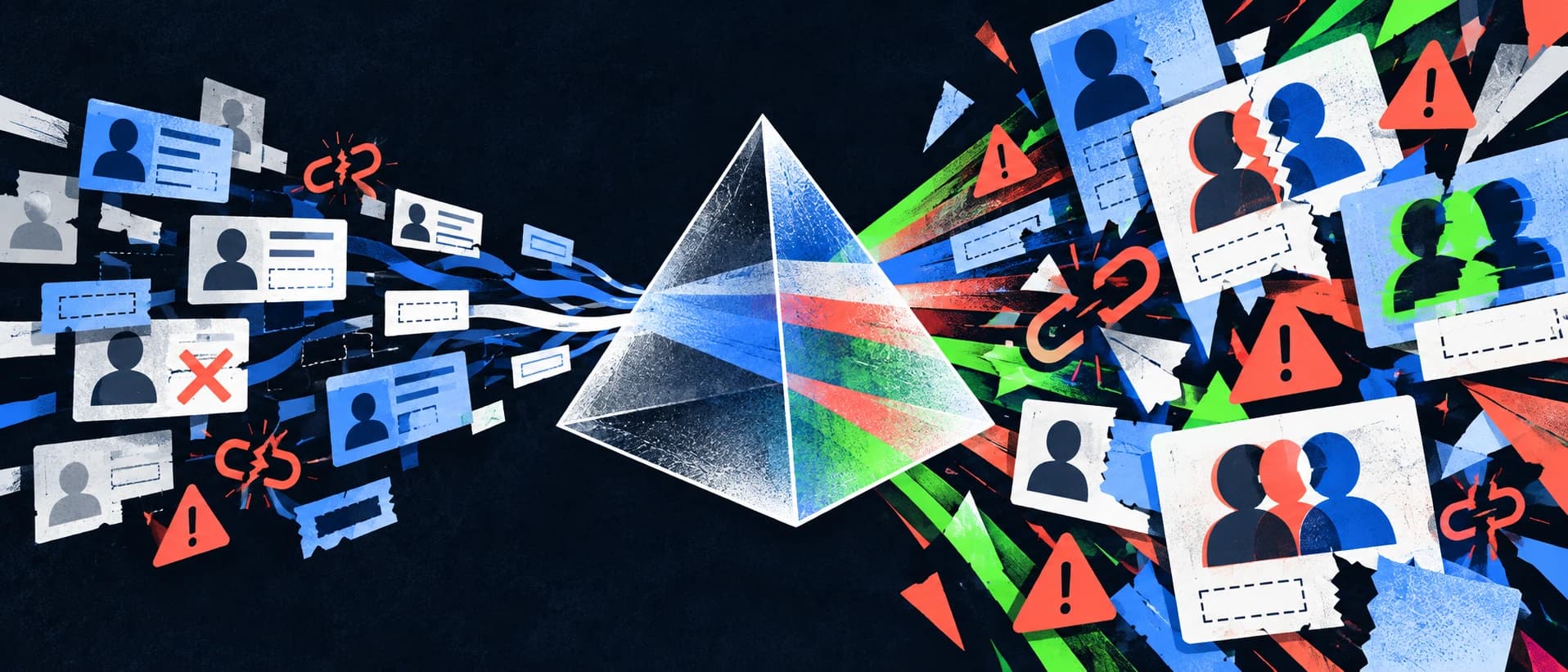
AI makes clean data more valuable—and bad data more expensive
The 2026 Salesforce State of Sales research reports that 51% of sales leaders using AI say disconnected systems slow their initiatives. The same research says high-performing organizations prioritize data hygiene more often than underperformers.
Salesforce has a commercial interest in agent adoption, so its survey should be treated as a market signal rather than universal proof. The operational lesson still stands without the headline statistics: an AI agent amplifies the customer context it receives.
If the record is current and well structured, the agent can accelerate useful work. If the record is duplicated, stale, or mixed with speculation, the agent produces bad decisions faster.
Traditional CRM hygiene is necessary but no longer sufficient
Classic data hygiene focuses on fields:
- remove duplicate companies;
- standardize names and regions;
- fill missing owners;
- validate email addresses;
- close stale opportunities.
AI agents add a second requirement: semantic hygiene. The system must distinguish what a statement means and how safely it can be reused.
“The customer operates in Northern Europe” may be stable profile information. “The customer may decide next Friday” is a dated activity. “A lower price will close the deal” is a seller hypothesis. “This configuration supports the application” may require product verification.
Putting all four sentences into one summary makes the account readable to a human, but ambiguous to an agent.
Five data-hygiene gates for AI sales agents
Gate 1: Resolve identity before enrichment
Do not merge records because they share an industry, product, or country. Require durable identifiers such as legal company name, business domain, verified contact, or phone number.
If identity remains uncertain, the agent should create a review item—not choose the most similar account.
Gate 2: Separate profile from activity
A profile holds relatively stable information. An activity records what happened at a specific time.
| Profile | Activity |
|---|---|
| Business type | Customer email received |
| Region | Meeting held |
| Buying process | Quotation requested |
| Known product environment | Delivery concern raised |
This distinction stops temporary events from becoming permanent “truth.”
Gate 3: Preserve source and status
Every material conclusion should keep its source type and confidence boundary:
- customer stated;
- seller confirmed;
- product documentation;
- historical record;
- third-party claim;
- hypothesis requiring confirmation.
Source labels help the next agent decide whether it can quote, act, or only investigate.
Gate 4: Preview writes before execution
Before changing CRM, show the target object, fields, evidence, change type, and expected result. This is a write plan.
For high-impact changes, confirmation is not friction. It is the point where a human checks whether the agent understood the business event.
Gate 5: Read back and preserve recovery
After a write, retrieve the exact object and compare the result. For deletion-like actions, use a recycle bin or soft archive so accidental changes can be reversed.
An API success response proves that a request ran. It does not prove that the right customer now contains the right information.
The safe writeback loop
A practical loop looks like this:
Source evidence
  -> exact customer match
  -> profile/activity classification
  -> write-plan preview
  -> human confirmation
  -> write
  -> exact readback
  -> recoverable lifecycle
Each step blocks a different failure. Removing one makes the others carry risk they were not designed to handle.
For the write-plan discipline in detail, read Before an AI Agent Writes to CRM, Require a Write Plan.
How KnowSales handles the boundary
KnowSales keeps customer profiles and timestamped activities as separate objects. Product knowledge remains outside the customer record, and personal versus shared libraries have different visibility rules.
Recent customer lifecycle work also uses a recycle-bin model rather than treating every deletion as immediate permanent loss. Combined with preview and readback, this creates a safer environment for human-and-agent collaboration.
The goal is not zero automation. It is automation that exposes the object, evidence, and result.
A weekly CRM hygiene review for agent-ready teams
Use this short review before expanding an agent's write access:
- Duplicates: Which accounts may represent the same legal entity?
- Stale next steps: Which active accounts have no dated evidence behind the current action?
- Mixed records: Which profiles contain temporary events or seller predictions?
- Source gaps: Which important claims cannot be traced to a customer, document, or approved internal source?
- Write failures: Which agent updates were not read back successfully?
- Archived records: Which recoverable records should be restored or permanently reviewed by an authorized owner?
This review is more useful than a generic “data completeness” score because it follows the way an agent actually consumes context.
Frequently asked questions
Can AI automatically clean an entire CRM?
AI can identify likely duplicates, missing fields, and inconsistent text. Identity merges, commercial facts, and destructive changes should remain reviewable because similarity is not proof.
Should an agent update the profile after every email?
No. Most emails create an activity. Update the profile only when the communication provides stable information that has been verified and is useful beyond the current event.
Is soft deletion enough for safety?
It improves recovery, but it does not replace authorization, confirmation, audit, or readback. A reversible wrong change is still wrong.
What is the safest first write permission?
A narrowly scoped activity append is usually safer than permission to overwrite profiles or delete accounts. The exact choice depends on the team's record model and review process.
Better agents begin with cleaner meaning
AI-ready CRM data is not merely complete. It is correctly identified, typed, sourced, current, permissioned, and recoverable.
That structure gives agents something more valuable than a large context window: a trustworthy boundary for action.
Connect KnowSales to your AI workspace and test one read-only account workflow before adding write permissions.