Before an AI Agent Writes to CRM, Require a Write Plan
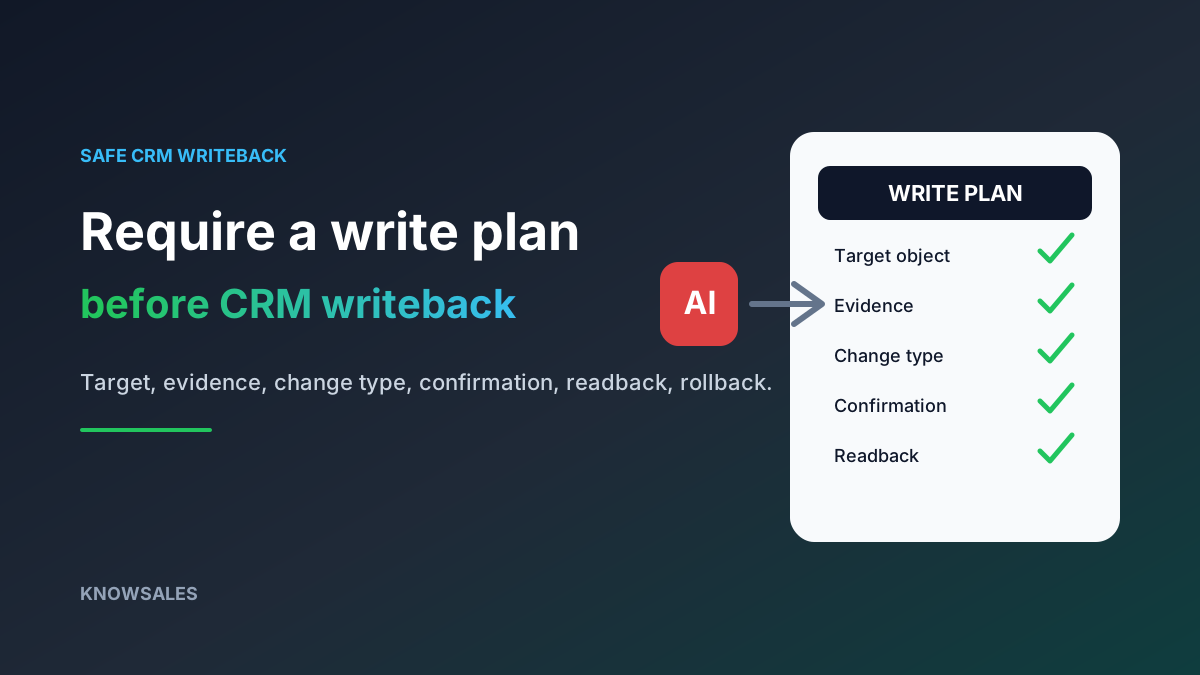
Before an AI sales agent writes to CRM, require a write plan with target object, evidence, change type, confirmation, readback, and rollback.
One bad write can live for a long time
The most underestimated risk in AI sales tooling is not a weak email draft. It is an AI agent writing the wrong thing into CRM or a sales knowledge base.
Once written, the error spreads:
- another rep treats it as customer truth;
- a dashboard treats it as pipeline progress;
- the next AI retrieval uses it as context;
- follow-up, quotation, and account judgment drift from the original evidence.
So once AI agents gain access to sales systems, the key question is not "can they write?" It is: do they produce a write plan before they write?
What a write plan is
A write plan is not "I'll update the customer record."
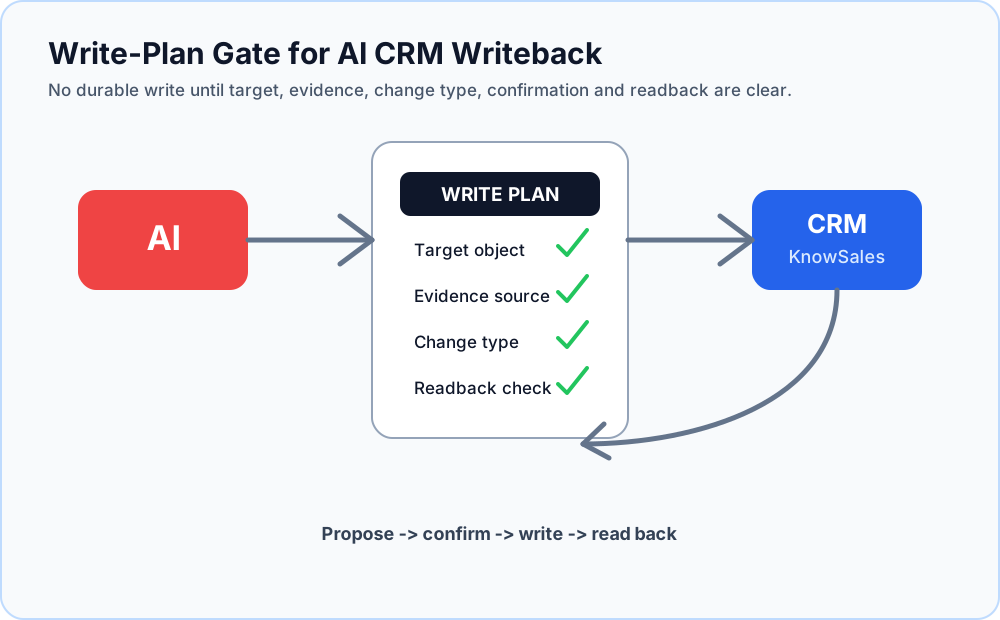
It is an auditable plan that answers at least six questions:
| Question | Example |
|---|---|
| Where will it write? | KnowSales customer profile / customer activity / product knowledge / tracker |
| Which object? | Company, contact, product card, or activity record |
| Which fields? | Machine interest, payment terms, next step, objection response |
| What is the evidence? | Which email, chat line, or user-confirmed source |
| What type of change? | Add, append, replace, delete, rollback |
| How will it verify? | Which object will be read back, and which fields must appear |
If the agent cannot answer these questions, it should not write.
The four most common bad writes
1. Customer identity mismatch
Industry words, product words, and material names can look similar. They are not identity evidence.
Two accounts mentioning the same machine category does not mean they are the same company. A reliable customer match needs hard identifiers: company name, email domain, contact, phone, historical order, or another durable signal.
A write plan should state the identity evidence. If the match is fuzzy, the plan should stop at "needs confirmation."
2. Activity written into profile
"The customer may pay this week" is an event, not stable profile truth.
It belongs in customer activity. If it is written into the profile, an AI agent may still treat "this week" as current truth months later.
3. Customer-specific facts turned into reusable playbook
One customer's accepted payment arrangement is not a general policy. One negotiated discount is not a global quotation rule.
The write plan must state whether the material is customer-specific or reusable knowledge.
4. Judgment written as fact
"The customer will probably order" is judgment. It is not a fact.
If the judgment is useful, it can be stored as an internal activity note and labeled as judgment. It should not become "customer confirmed order."
What a good write plan looks like
A simplified example:
Target: KnowSales customer activity
Object: Customer Company A (evidence: company name + business email domain + confirmed contact)
Source: WhatsApp thread on 2026-07-01
Write:
- Customer asked about a specific product-fit requirement
- Customer asked to confirm lead time and implementation conditions
- Payment terms are not confirmed
Do not write:
- Do not update stable customer profile demand
- Do not create reusable product knowledge until engineering confirms fit
Verify:
- Read back the latest Customer Company A activity
- Confirm timestamp, source, and three facts appear
That is the smallest boundary within which an AI agent can write safely.
How SalesFlow and KnowSales work together
SalesFlow is built around a write-plan-first discipline: produce the seller artifact and write plan, then wait for user confirmation.
KnowSales provides the durable sales memory layer: customer profiles, activities, product knowledge, objection cards, and dashboards all have clear destinations.
Together, they turn AI writeback from "the model thinks it should update this" into:
SalesFlow proposes -> user confirms -> KnowSales writes -> readback verifies
That is slightly slower than blind automation. It is much more trustworthy.
When the agent must stop
An AI agent should stop before writing when:
- customer identity has only semantic similarity, not hard identifiers;
- the original inquiry, email, or chat evidence is missing;
- the target layer is unclear;
- facts and judgment are blended;
- the user has not confirmed the write plan;
- readback verification is not possible.
These are not bureaucratic steps. They are the minimum controls that keep a sales memory system clean.
Summary
An AI agent should not write to CRM simply because it has tool access.
It should first provide a write plan: target object, evidence, change type, confirmation, readback, and rollback path. If it cannot explain the write, it should not perform the write.
That is the standard KnowSales is built around: a strong AI sales assistant does not silently mutate your data. It turns every durable write into a confirmable, traceable, readable action.